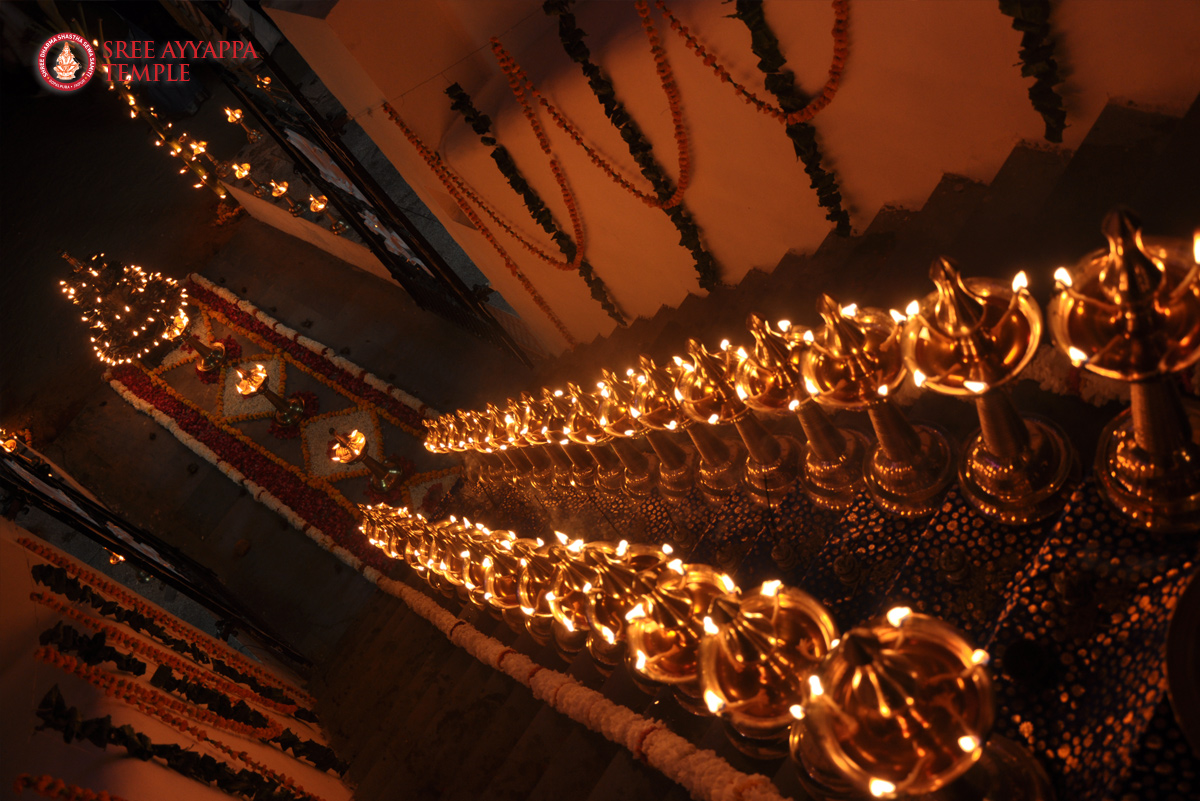
Karkkidaka Vavu is one of the most significant ancestral observances for Kerala Hindus. It falls on the new moon day (Amavasya) of the Malayalam month Karkkidakam — the first Amavasya of Dakshinayanam, when the sun begins its southward journey. This year and every year, Ayyappa devotees across Jaipur observe this sacred ritual at the temple.
“Pithru tharpanam is the most noble ritual all Hindus must perform — a remembrance of one’s ancestors, back through seven generations.”
What is Karkkidaka Vavu?
Hindus believe that paying respect to Pithru devatas (ancestral spirits) during Dakshinayanam is especially meritorious. The observance on Karkkidaka Vavu is called Bali or Tharpanam — an offering of water, sesame seeds (til/ellu) and rice to the departed souls of one’s ancestors.
Tradition holds that one should observe the Bali for the past seven generations of one’s family. Yearly Pithru Bali for each deceased family member, performed by their children, is considered a sacred duty.
How the Ritual is Observed
A semi-fast is observed on the day preceding Karkkidaka Vavu — called Orikkal, meaning having rice (annam) only once during the day. On the day itself, devotees wake early, bathe, and visit the temple or a river bank to perform Tharpanam.
🙏 What You Offer
Water mixed with black sesame seeds (black ellu/til) and raw rice are cupped in the hands and offered southward — the direction associated with the ancestors. The offering is accompanied by the chanting of Pithru mantras, invoking each generation by name if known.
In the evening, Ada — a sweet rice preparation made on plantain leaves — is offered to God as prasadam. Idli, vada, and Ada are traditionally served as the dinner prasadam after the Karkkidaka Bali Tharpanam.
Why Karkkidakam is Special
Karkkidakam is also known as the Ramayana Month in Kerala — the entire Ramayana is read aloud in homes and temples throughout this month. It is a time of reflection, fasting, and deep spiritual observance. The Amavasya of this month is considered the most potent day of the year for ancestral rites.
“We hope the younger generation watches and follows the family heritage of these religious rituals — for they carry the wisdom of generations.”
At Shree Ayyappa Temple, Jaipur
Devotees at our temple are welcome to perform Karkkidaka Vavu Bali on the temple premises with the guidance of our priests. For those unable to reach a river or sea, the ritual can be performed at home — on the terrace or in any open space — by offering a handful of rice and black sesame seeds toward the south, remembering one’s ancestors with love and gratitude.
The community aspect of this observance is as important as the ritual itself. Coming together at the temple, sharing prasadam, and collectively honouring our forebears strengthens the bonds of family, community, and tradition.